
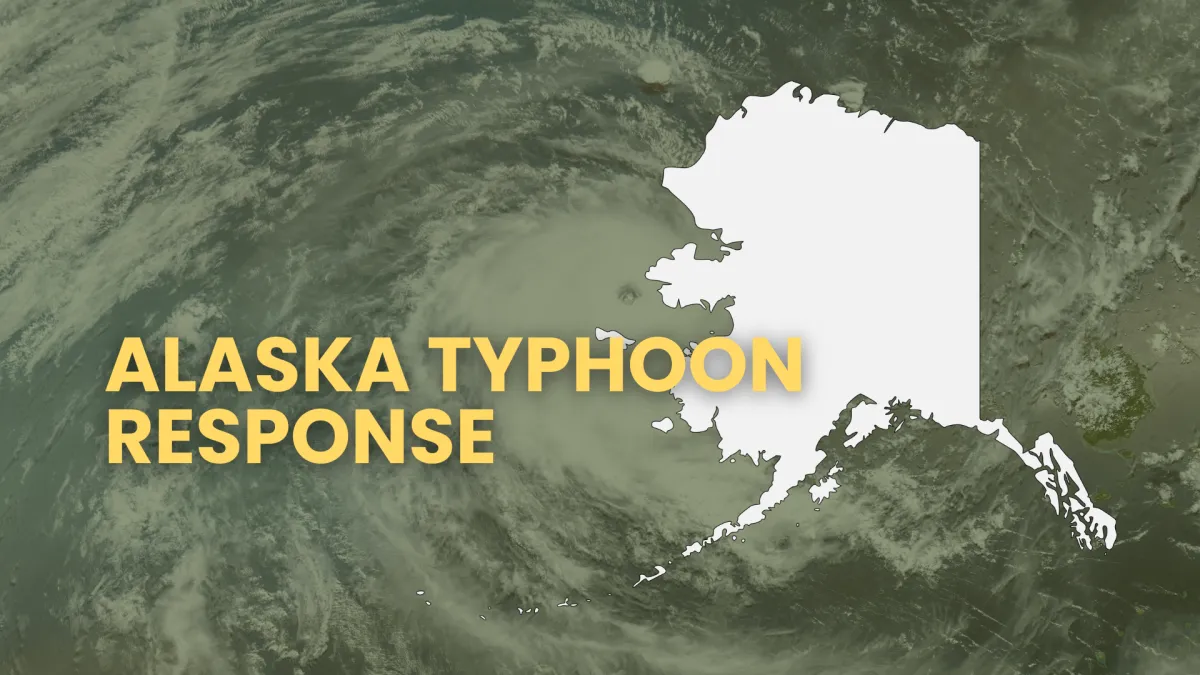
Alaska Typhoon 2025
Beacon Rescue Supports Alaska Communities Following Typhoon Halong
A collaborative coordination network helps manage aid flow and transition toward long-term recovery
Impact Overview
In late 2025, the remnants of Typhoon Halong impacted parts of Western Alaska, bringing severe storm conditions, coastal flooding, and infrastructure disruption to remote and rural communities across the Yukon Delta region.
Many of these communities are only accessible by air and rely on fragile supply chains, making disaster response uniquely complex. Flooding, contamination of water sources, and damage to subsistence infrastructure created both immediate humanitarian needs and long-term recovery challenges.
Beacon Rescue supported response efforts through the Lifeline Network—a collaborative disaster coordination network led by Beacon Rescue and Fill the Needs—working alongside local partners and community leaders to manage aid flow, identify gaps, and support both response and recovery operations.
This response highlighted a critical reality of disaster operations in remote regions:
Getting aid into a region is only part of the challenge—getting the right aid to the right place at the right time is what matters most.
Response by the Numbers
Lifeline Network activated to support Alaska response
250+ hygiene kits coordinated for delivery
1 pallet of water delivered to regional distribution hub
Aid routed through air logistics into Bethel, Alaska
Multiple villages supported through coordinated distribution
Transition from response to long-term recovery planning initiated
Coordinating Aid Into Remote Communities
In the immediate aftermath of the storm, requests emerged from villages across the Yukon Delta for essential supplies, including clean drinking water, hygiene kits, and basic household goods.
Through the Lifeline Network, Beacon Rescue and Fill the Needs worked together to source, coordinate, and move aid into Alaska’s remote logistics system.
Supplies were routed through air cargo hubs in Bethel, where local partners could receive and redistribute aid to surrounding villages.
This coordinated effort ensured that critical supplies reached staging areas efficiently while maintaining visibility across incoming shipments.
Managing the Complexity of Distribution
As aid began arriving, a new operational challenge emerged:
Too much uncoordinated aid arriving at once.
Distribution centers in Bethel quickly reached capacity, with warehouses and staging areas filled beyond operational limits. At times, local officials could no longer accept additional donations due to space constraints.
Through the Lifeline Network, Beacon Rescue and Fill the Needs worked together to shift operations from inbound aid to managed distribution, coordinating with partners and local contacts to:
Track incoming shipments
Coordinate receiving points
Prevent overloading of distribution centers
Align supply flow with real-time needs
This phase of the response reinforced the role of the Lifeline Network as a system for managing flow—not just delivering resources.
Supporting Community-Level Distribution
Aid entering Bethel required additional coordination to reach smaller villages such as Tuntutuliak, where needs remained high and access was limited.
Working through the Lifeline Network, Beacon Rescue and Fill the Needs coordinated:
Last-mile delivery through air transport
Alignment of shipments with community-specific needs
Distribution through trusted local partners
This ensured that aid moved beyond bulk delivery and into targeted, needs-based distribution at the community level.
Transitioning from Response to Recovery
As immediate needs stabilized, it became clear that the long-term impact of the storm extended beyond short-term aid.
Local partners identified critical recovery needs, including:
Rebuilding subsistence infrastructure
Replacing essential transportation equipment
Restoring food storage and preservation systems
Through the Lifeline Network, Beacon Rescue and Fill the Needs began coordinating with partners to support longer-term recovery planning, including logistics pathways for future shipments and potential deployment support.
A Network Built for Complex Disaster Environments
The Alaska response demonstrated how disaster coordination must adapt to unique geographic and logistical challenges.
The Lifeline Network—led by Beacon Rescue and Fill the Needs—served as the central coordination structure, aligning:
Nonprofit organizations
Logistics and aviation partners
Local community leadership
Donors and supply sources
This approach ensured that aid was not only delivered—but delivered effectively, efficiently, and without overwhelming local systems.
Strengthening Disaster Response Systems
The Alaska deployment reinforced a critical principle:
Disaster response is not just about delivering aid—it’s about managing systems.
The Lifeline Network is designed to:
Coordinate resources across multiple organizations
Prevent duplication and oversupply
Improve operational efficiency
Support both response and recovery
In remote regions like Alaska, where logistics are constrained and communities are widely dispersed, this level of coordination is essential.
Because when disaster strikes, getting it right matters more than getting it fast.
And no community should face crisis alone.
Support Future Disaster Responses
Beacon Rescue’s ability to coordinate complex logistics and support communities in remote environments is made possible through donors and partners who believe in building better systems for disaster response.
Together, we can ensure that when disaster strikes, help arrives where it’s needed most—without adding to the chaos.