
From Green Beret to Rescue Instructor: Why Special Forces Veterans Lead Beacon Rescue's Training
People sometimes ask why a disaster response nonprofit in, Tennessee is led and instructed largely by Special Forces veterans, along with law enforcement officers and emergency managers. It's a fair question. Rescue work is not combat, and we would never suggest otherwise.
The answer is that the specific competencies a Green Beret spends a career building map almost exactly onto what a disaster deployment demands — and onto what a training program has to teach if it's going to hold up when conditions get bad.
Special Forces are trained to teach
This is the part most people don't know. Teaching is not a side duty in Special Forces; it is a core mission. Green Berets are selected and trained to work with and train partner forces — often across a language barrier, often with limited equipment, often on a short timeline, and always with the expectation that those people will still be capable long after the team leaves.
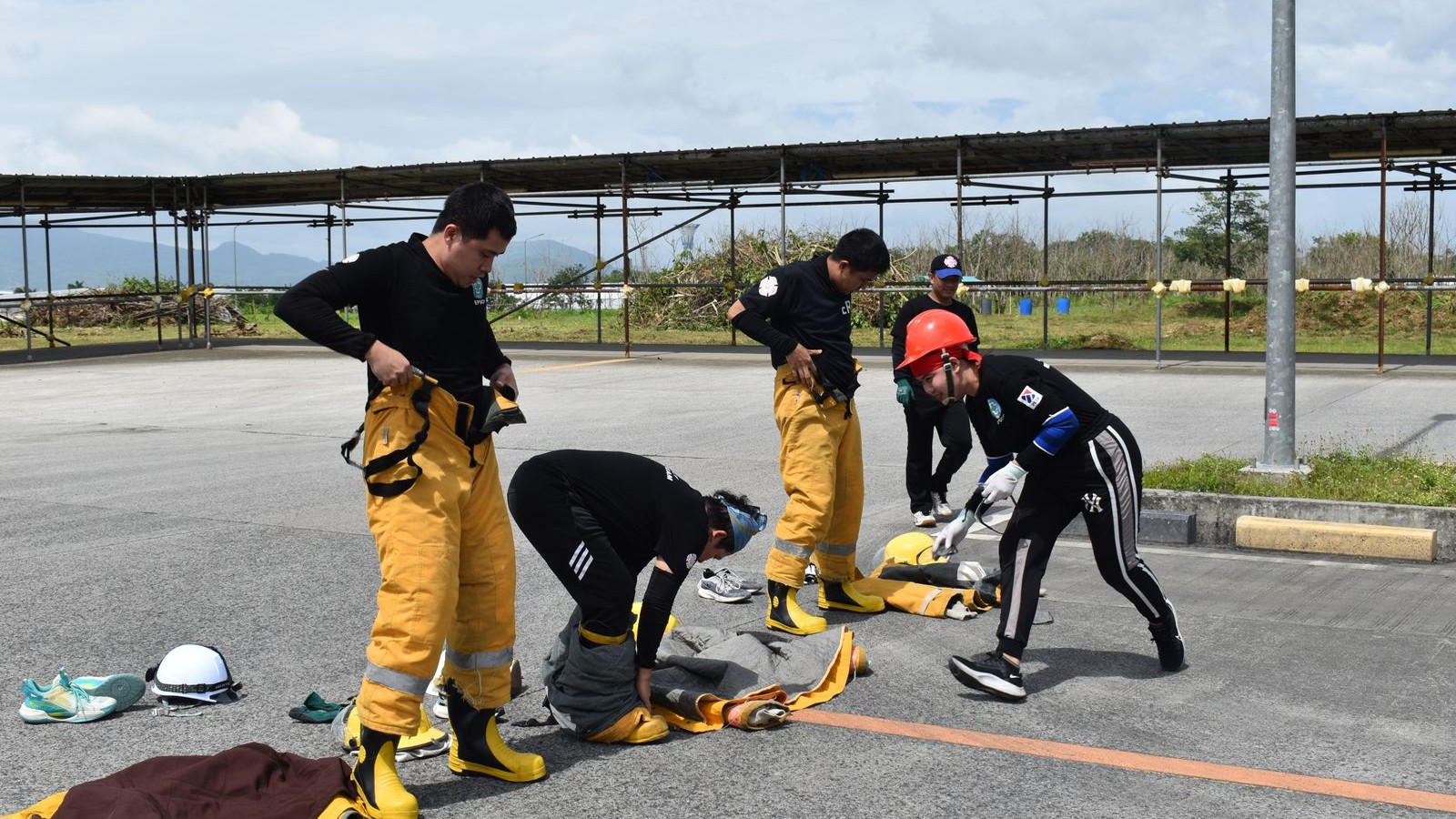
That's the same problem a rescue training program has to solve. When we run training for a volunteer fire department in a rural county, we're not there to perform the rescue. We're there so that department can perform it at 2 a.m. in six months, without us, using the equipment they actually own.
An instructor whose entire career was built around making other people capable approaches that differently than an instructor who was trained to do the job personally.
Small-team operations in austere conditions
A disaster zone in the first 72 hours has a specific character: communications are degraded, infrastructure is damaged or gone, the situation changes hourly, and no one has complete information.
Special Forces operational detachments are built for precisely that environment — small teams, distributed decision-making, extended operations without resupply, and the expectation that the plan will change. So are law enforcement officers who have worked critical incidents, and emergency managers who have run an operations center during a real event.
What that produces on a deployment is a team that doesn't stall when the picture is incomplete. Waiting for perfect information is a luxury the first day of a flood response does not offer.
Cross-functional depth
An SF team is deliberately built so that a handful of people cover a wide functional range — medical, communications, engineering, operations, intelligence. Every member is trained in a specialty and cross-trained in others so the team keeps functioning when someone is unavailable.
That structure translates directly. A swift water rescue element needs medical capability, working communications, and someone who can read terrain and water — not four separate agencies who each own one of those things.
It also shapes what we teach. Training a rural fire department in a county where the ambulance may be forty minutes out means teaching bleeding control alongside extrication, not treating them as separate courses for separate people.
Interagency coordination is a learned skill
The first 24 hours of a disaster involve a sheriff's office, a county emergency management agency, a fire department, state resources, and often several nonprofits, none of whom report to each other.
Working inside somebody else's command structure — with authority you don't hold, resources you don't control, and objectives you didn't set — is a genuine skill. It is also the daily reality of Special Forces work with partner nations, and of law enforcement mutual aid.
Practically, this is why our teams show up asking who is running the incident and where we plug in, rather than arriving with our own plan. Self-deployment without coordination is one of the most common ways well-intentioned volunteers make a disaster response harder.
Discipline about risk
There's a version of rescue work that looks heroic and gets people hurt. We're not interested in it.
The military planning habits that carry over here are unglamorous: rehearsals before execution, defined go/no-go criteria, medical and communications plans made before anyone deploys, and honest after-action reviews that name what went wrong. A rescuer who becomes a patient has converted one problem into two and consumed the resources meant for someone else.
That discipline is what we try hardest to transfer in training. Not the equipment — the judgment about when to commit and when to wait.
What this means for the departments we train
Tennessee's rural fire and rescue capability rests heavily on volunteers, and training budgets in small departments are thin. That's the gap Beacon Rescue exists to close: instruction delivered by people who have both operated in these conditions and been formally trained to teach, provided to the departments and agencies who need it.
The measure of that work isn't how many deployments we run. It's how capable a county is after we've gone home.
Support the mission
Beacon Rescue is a 501(c)(3) nonprofit based in Cumberland Furnace, Tennessee, providing disaster response and first responder training, and working to combat human trafficking. Our training and deployment capability is funded by people who decide it's worth funding.
If this is the kind of work you want in your community, you can make a donation or get in touch about volunteering or partnering with us.