
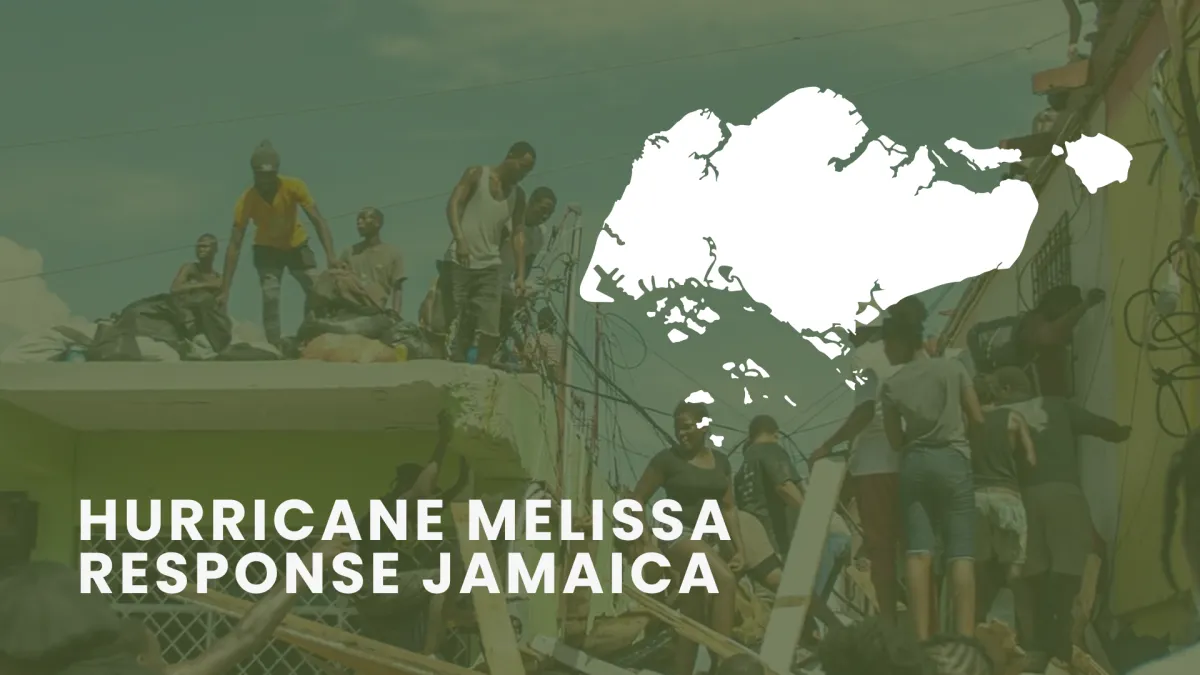
Jamaica Hurricane Melissa Response
Beacon Rescue Supports Hurricane Melissa Recovery in Jamaica
Lifeline Network partners help deliver connectivity, medical support, and humanitarian aid to rural communities
Impact Overview
In late 2005, Hurricane Melissa struck parts of the Caribbean with destructive winds, heavy rainfall, and widespread infrastructure damage. The storm caused severe flooding, landslides, and transportation disruptions across Jamaica, particularly in mountainous and rural areas where road access and communications were significantly impacted.
In response, Beacon Rescue deployed personnel to Jamaica to support humanitarian and medical access to the rural community of Accompong, a village that serves as a hub for several surrounding communities.
Working through the Lifeline Network of trusted nonprofit partners, Beacon Rescue helped coordinate humanitarian aid delivery, deploy communications infrastructure, and establish connectivity that could support telemedicine and logistics coordination for ongoing relief efforts.
Despite challenging terrain and damaged infrastructure, the mission successfully delivered aid, established communications capability, and strengthened relationships with local leadership to support ongoing recovery efforts.
Impact Snapshot
International deployment to Jamaica supporting hurricane recovery efforts
Satellite internet connectivity established for community communications
Medical supplies, medications, and humanitarian aid delivered
Water filtration systems deployed to support clean drinking water access
Multiple nonprofit partners coordinated through the Lifeline Network
Forward team successfully reached remote mountain community
Reaching a Remote Community in Need
The mission focused on the rural village of Accompong, located in Jamaica’s mountainous interior and serving as a regional hub for several surrounding villages.
Access to the area was severely impacted by hurricane damage, including washed-out roads, debris, and obstructed mountain routes.
Despite these challenges, a forward element of the collaborative effort successfully reached Accompong and established contact with local leadership, including:
The Accompong Chief
Local medical personnel
Community liaison partners assisting with aid coordination
These connections allowed the team to better understand the immediate needs of the community and begin coordinating support with partner organizations.
Establishing Critical Communications Infrastructure
One of the most important capabilities delivered during the mission was satellite internet connectivity for the village.
Beacon Rescue deployed a Starlink satellite internet system, providing reliable internet access that could support:
Telemedicine coordination with outside medical partners
Communication with humanitarian aid organizations
Ongoing logistics coordination and information sharing
This capability created a communication bridge between the village and external partners, enabling faster coordination of aid and support for surrounding communities as recovery efforts continued.
Delivering Humanitarian and Medical Aid
Through coordination with Lifeline Network partners, the mission delivered several forms of humanitarian assistance to the community.
Supplies delivered included:
Medical supplies and medications
Water filtration systems
Additional humanitarian aid coordinated through partner organizations
Water filtration systems provided by Waves for Water helped support safe drinking water access for local residents.
Medical support was coordinated in partnership with Jace Response, which provided medications and medical supplies to support healthcare needs in the community.
Additional logistical support and coordination were provided through partners including Fill the Needs, Heal Corp, AeroBridge, Chazak Rescue, Plain compassion Crisis Response, and Props for Purpose, each contributing unique capabilities that helped make the mission possible.
Overcoming Challenging Terrain and Infrastructure Damage
The deployment required navigating significant logistical challenges caused by hurricane damage.
The team encountered:
Washed-out and degraded roads
Mountain routes blocked by debris
Downed power poles obstructing travel
Narrow terrain limiting vehicle movement
Vehicle limitations and route obstructions forced the team to adjust travel plans multiple times, transfer equipment between vehicles, and rely on local guidance to navigate damaged infrastructure.
Despite these obstacles, the forward team successfully reached the village, delivered aid, and established the communications infrastructure needed to support ongoing humanitarian operations.
Strengthening Partnerships with Local Leadership
Beyond immediate aid delivery, the mission focused on building relationships that could support long-term humanitarian coordination.
Beacon Rescue worked closely with:
The Accompong Chief
Local medical personnel
Community coordinators assisting with relief efforts
These relationships helped establish a foundation for future telemedicine support, aid coordination, and humanitarian access for surrounding villages in the region.
A Coordinated Network of Partners
The Hurricane Melissa response demonstrated the strength of coordinated nonprofit partnerships working together to support communities impacted by disasters.
Key partners involved in the mission included:
Fill the Needs – humanitarian logistics and aid coordination
Waves for Water – water filtration systems
Jace Response – medical supplies and medications
Heal Corp – operational coordination support
AeroBridge – aviation logistics coordination
Props for Purpose – mission support and logistics
Chazak Rescue - Logistics and Vehicle procurement
PCCR - Route and Driving assistance
By working together through the Lifeline Network, these organizations were able to deliver targeted assistance while maintaining a coordinated operational footprint.
Expanding Global Disaster Response Capabilities
The Accompong deployment demonstrated Beacon Rescue’s ability to support international humanitarian missions, combining rapid deployment with coordination among trusted partner organizations.
The mission successfully:
Reached a remote community impacted by hurricane damage
Established communications infrastructure
Delivered humanitarian and medical aid
Built relationships with local leadership
Returned all personnel safely
Each mission strengthens Beacon Rescue’s ability to coordinate disaster response operations across both domestic and international environments.
Because when disaster strikes, coordination and partnership are essential.
And no community should face crisis alone.
Support Future Disaster Responses
Beacon Rescue’s ability to deploy teams, coordinate partner organizations, and deliver humanitarian assistance during disasters is made possible through the support of donors and partners.
Your support helps expand training programs, logistics capability, and coordinated disaster response across the United States and internationally.
Together, we can ensure that when disaster strikes, help arrives faster.