
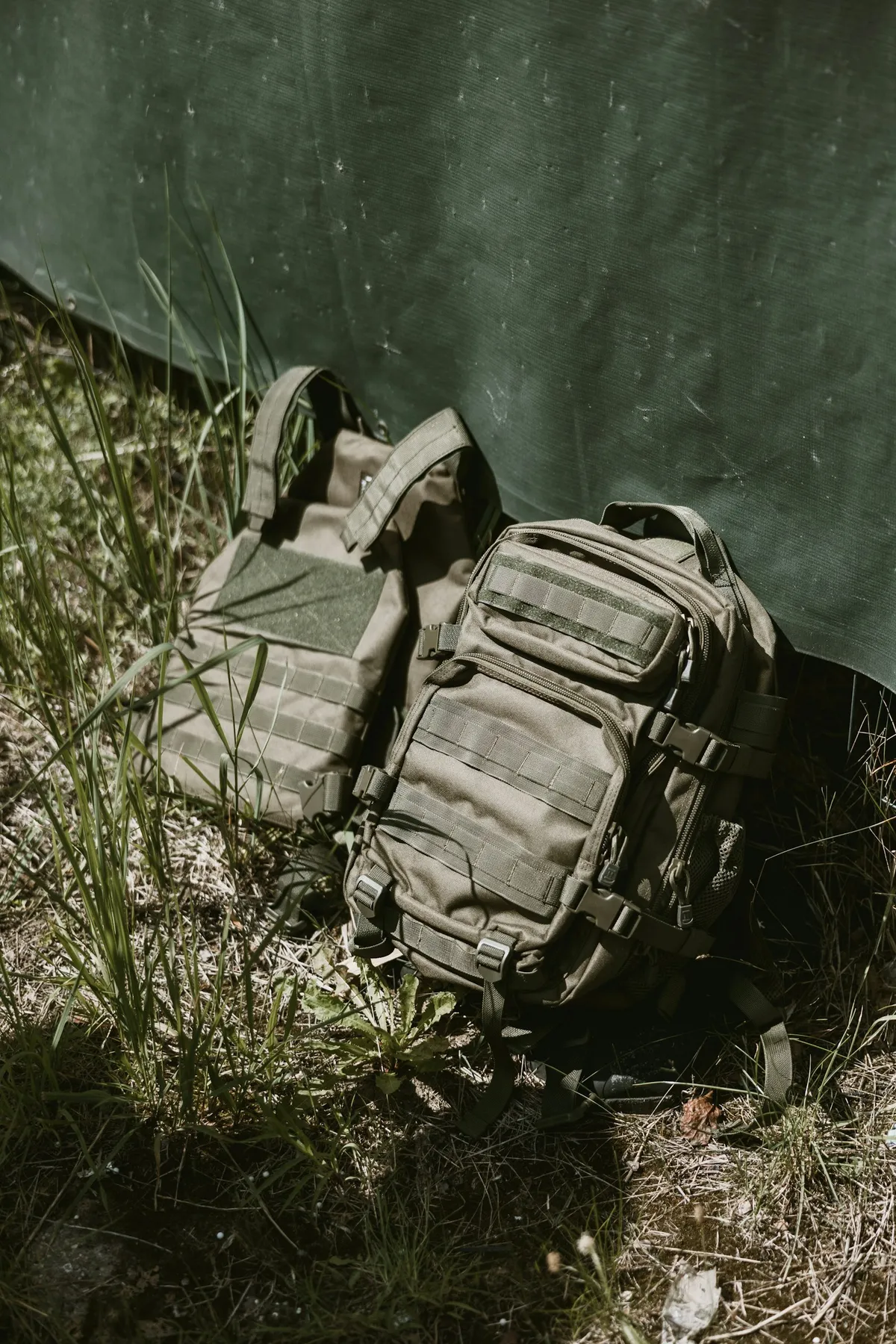
Packed for 14 Days: Everything a Beacon Rescue Responder Carries on a Long Deployment
When a county Emergency Management Agency calls Beacon Rescue, the clock starts immediately — and the gear has to already be staged. Our teams deploy self-sufficient, which means every responder who rolls out the door is carrying enough to work, eat, sleep, and treat patients for up to two weeks without pulling resources from the community they're there to help. Here's what actually goes in the bag.
Personal protective and water rescue gear
Every deployment kit starts with the gear that keeps a responder alive before it does anything else. For swift water operations: a Coast Guard-rated rescue PFD, a water-rated helmet, a drysuit or wetsuit depending on season, water rescue gloves, a rescue knife, and a throw bag with at least 75 feet of floating line. For structural and debris work: a hard hat, cut-resistant gloves, steel-toe boots, and eye protection. Rope rescue adds a harness, locking carabiners, a rescue figure-8 or belay device, and enough static-kernmantle rope to rig an anchor system on whatever the terrain hands us — a bluff, a grain bin, a barn loft.
Medical
Every responder carries an individual first aid kit built around Stop the Bleed fundamentals: a tourniquet, hemostatic gauze, pressure dressings, and a chest seal. Team-level kits go further, with splinting supplies, IV fluids for credentialed medics, and a basic airway kit. In the first 24–72 hours of a disaster, the nearest hospital can be an hour or more away on roads that may not exist anymore — the kit has to assume that.
Sustainment — the part nobody photographs
A 14-day deployment means 14 days of food, water purification, and shelter that doesn't depend on local infrastructure. That's MREs or comparable field rations, a water filtration system rated for the volume a team actually drinks, a sleeping system rated for the season, and a headlamp with spare batteries — because disaster zones lose power before they lose anything else. We also pack basic hygiene and a change of dry clothes, which sounds minor until a responder has been wet for two days straight.
Communications, navigation, and debris tools
Cell towers go down. Every team carries a handheld radio, a charged satellite communicator as backup, a physical map of the area (phones die, paper doesn't), and a GPS unit. Chainsaws and basic debris-clearing tools ride along too — unglamorous, but roads have to be cleared before a rescue team can reach anyone, and that work usually falls to whoever's already on scene with a saw and fuel.
Why the list matters beyond our own teams
This same kit list is the backbone of our 2026 training mission: putting 100 Tennessee volunteer firefighters through free certification in swift water rescue, rope rescue, and emergency medicine. The gear above is useless without the training to use it correctly under pressure, and vice versa — which is the lesson Erwin Fire Department's Hurricane Helene response drilled into us. A volunteer with a drysuit and no swift water certification is a liability. A volunteer with both is an asset a county can actually request.
We outfit every trainee who completes certification with the core of this kit, free, because a department that can't afford the gear usually can't afford the training either — and we'd rather solve both problems at once.
Want to help put the next volunteer firefighter through training and gear? Fund a kit or a training seat. Leading a department or church group that wants in on the 100-firefighter campaign? Reach out here.