
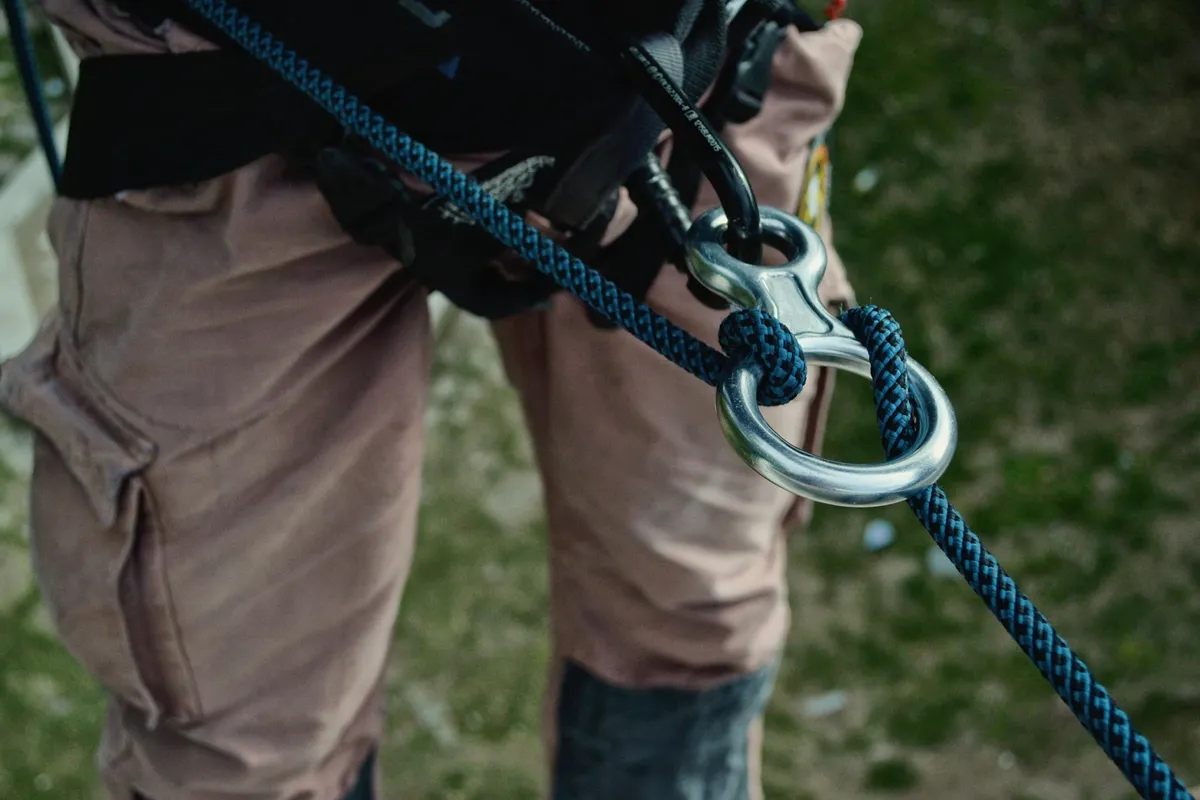
Rope Rescue in Rural Tennessee: The Bluff, Barn, and Grain Bin Calls Nobody Trains For
When a rural Tennessee fire department calls for rope rescue help, it's rarely the scenario pictured in a standard training manual. It's not a highrise or a parking garage. It's a hunter stranded on a bluff ledge above the Tennessee River Gorge, a farmhand pinned under a collapsed hay loft, or — one of the most time-critical calls in agriculture — a worker going under in a grain bin. These are the calls that show up on rural Tennessee's radio traffic, and they're the ones most departments have never specifically trained for.
Why Standard Rope Curriculum Misses Rural Terrain
Most rope rescue courses are built around the incidents that are easiest to standardize: a technical rescue team rappelling a building face, a trench collapse, a structural collapse in an urban grid. That training is valuable, but it assumes anchor points, access roads, and response times that rural Tennessee doesn't have. A bluff rescue in a state park means hauling rope bags, litters, and edge-protection gear a half mile on foot before a rope ever gets rigged. A barn or grain bin call means working around livestock, loose hay, unstable flooring, and machinery that's still running when the first truck arrives.
The Bluff Call
Tennessee's river gorges, bluffs, and ridgelines draw hikers and hunters year-round, and a slip on wet rock doesn't wait for a rescue team to study the terrain first. Low-angle litter evacuation off an exposed ledge calls for improvised anchors on trees or boulders, a belay line independent of the haul system, and a crew that has actually rigged on uneven rock — not just a gym wall or a drill tower. Beacon Rescue's training puts volunteer firefighters on real bluff terrain for exactly that reason.
The Barn Call
A collapsed hay loft, an animal down in a stall, or a person pinned under equipment in a barn all share the same problem: confined, cluttered space with poor anchor points and limited room to maneuver a litter. Crews have to adapt standard rope systems to a structure that was never built with rescue access in mind, often while managing frightened livestock at the same time.
The Grain Bin Call
Grain engulfment is one of agriculture's fastest-moving emergencies. Flowing grain can pull a person below the surface in seconds, and the pressure of surrounding grain can make a simple pull-out impossible — rescuers need a cofferdam or rescue tube, a tripod anchor system, and a plan to relieve the grain pressure before extraction, not after. Without that specific training, well-meaning crews can make an engulfment worse. It's a narrow, high-consequence skill set, and most volunteer departments near Tennessee's farm country have never had the chance to drill it.
What Beacon Rescue Trains For
Beacon Rescue's rope rescue courses are built and taught by Special Forces veterans, law enforcement, and emergency managers who have worked these exact calls — not a generic high-angle curriculum repackaged for a rural audience. The training is free to volunteer firefighters, part of our 2026 goal to train 100 Tennessee volunteer firefighters in swift water, rope, and medical skills at no cost to them or their departments. A small department that has never rigged on a bluff, in a barn, or around a grain bin gets to practice those exact scenarios before the call comes in, not during it.
If your department has a bluff, a barn, or a grain operation in its first-due area and wants to request training, or if you'd like to help fund a seat for a volunteer firefighter, reach out at beaconrescue.org/contact or support the mission directly at beaconrescue.org/donate.