
Self-Deploying Doesn't Help: The Right Way for Volunteers to Show Up After a Disaster
Within hours of a major flood or storm, two things show up in the affected county at the same time: the agencies that were asked to come, and the volunteers who weren't. The instinct behind the second group is good — people see the news, load a truck with water and chainsaws, and drive toward the damage because they can't stand to do nothing. But in disaster response, good intentions without coordination don't add capacity. They add a problem the responders already on scene now have to manage.
What Self-Deployment Actually Costs a Disaster Zone
Emergency managers have a name for this: convergent volunteerism. It is one of the most consistent, well-documented complications in U.S. disaster response, and it has nothing to do with the volunteers' character. An uncredentialed person who shows up at a county Emergency Operations Center asking "where do you need me?" still has to be fed, housed, tracked, and kept out of active hazard zones — using the same staff and radios that are supposed to be running search, rescue, and shelter operations. Vehicles with no convoy plan clog the single usable road into a washed-out community. Untrained volunteers wading into moving water to "help" become the water rescue call that pulls a swift water team off a mission it was already running.
None of this means people shouldn't want to help. It means the help has to be requested, trained, and routed through the same system the professional responders are using — or it isn't help.
How a Request-Based Deployment Actually Works
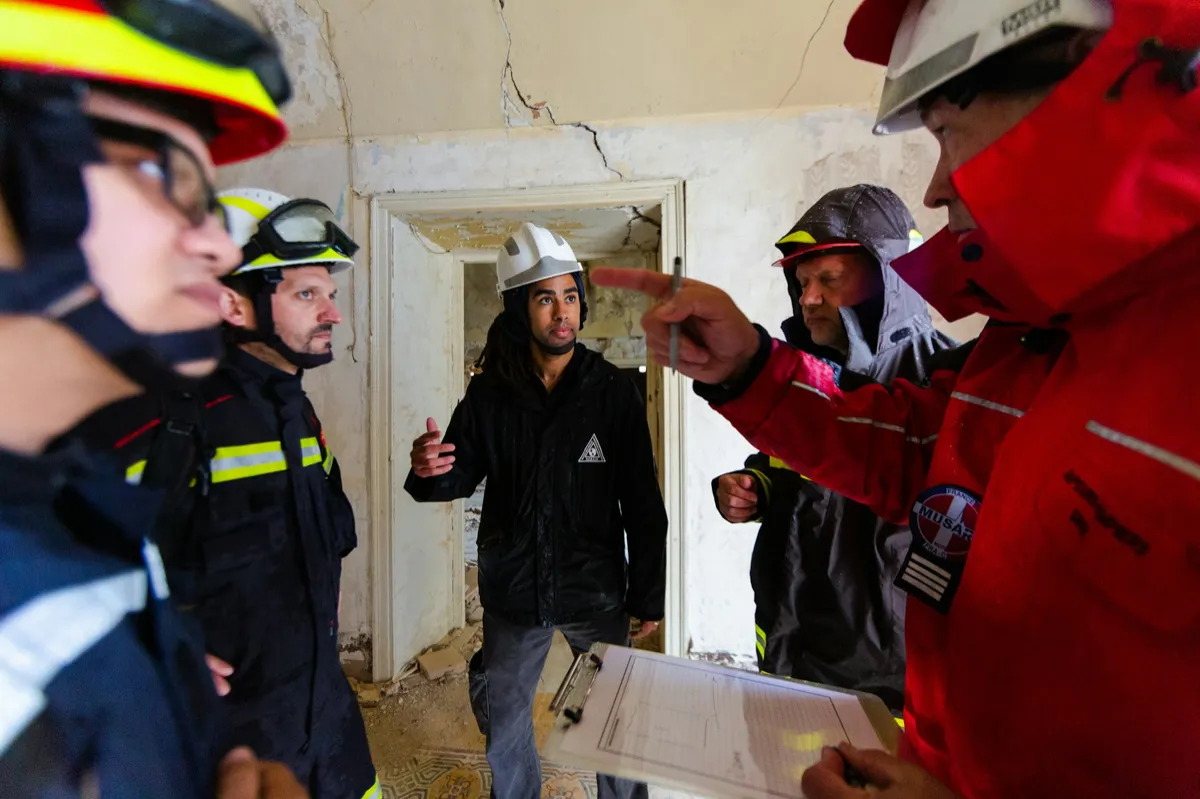
Beacon Rescue does not send teams because a disaster is on the news. We deploy because a county Emergency Management Agency, a sheriff's office, or a partner agency has made a formal request through the mutual aid and coordination channels already in place before the storm ever forms. That request specifies what's needed — swift water rescue, technical rope rescue, emergency medical support, logistics — and our team deploys credentialed, self-sufficient, and briefed into an existing incident command structure, not around it.
Self-sufficient is not a small detail. Every responder we send carries roughly two weeks of their own food, water, shelter, and mission gear, because a deploying team that needs local resources is taking from the community it came to help. That standard exists because we watched it matter in real time: when Hurricane Helene hit Erwin, Tennessee in 2024, the departments that could sustain a multi-day response were the ones who had trained and equipped for exactly that scenario in advance. The ones improvising in the moment were stretched thinnest.
The First 24 Hours Are Already Choreographed
What outsiders rarely see is how much of a county's disaster response is scripted before the first responder arrives. Sheriffs, EMAs, fire departments, and nonprofit partners like Beacon Rescue train together, maintain mutual aid agreements, and run the same incident command system specifically so that when the real event hits, nobody is improvising who answers to whom. Adding an unplanned variable — a van of well-meaning strangers with no assigned task, no comms plan, and no exit strategy — doesn't fit into that structure. It has to be absorbed by it, at a moment when every hour of staff time is already spoken for.
How to Actually Help When You Want to Show Up
If you want to be useful in the next disaster instead of in the way, there are three paths that work:
Get trained before the disaster, not during it. Beacon Rescue's 2026 mission is training 100 Tennessee volunteer firefighters, free, in swift water rescue, rope rescue, and emergency medicine — exactly the skills that turn a willing volunteer into a credentialed asset a county can actually request by name. If you're on a department, or know one that could use this, that training is open now.
Fund the response instead of freelancing it. A donated dollar moves through an established supply chain at a speed and scale an individual trip never can — it equips a technician, fuels a deployment, or sponsors a training seat for a volunteer firefighter who will be ready for the next one.
Register with a credentialed organization before the next event, not after it starts. Beacon Rescue and agencies like us can vet, train, and roster volunteers ahead of a disaster, so that when a county does need extra hands, there's a known, trained person to call instead of an unknown one to manage.
Showing up matters. Showing up ready, requested, and accounted for is what actually helps.
Request training for your department or ask how to volunteer: beaconrescue.org/contact
Fund a deployment or a training seat: beaconrescue.org/donate