
Stop the Bleed: The Medical Skills Every Rural Household Needs When the Ambulance Is 40 Minutes Out
In much of rural Tennessee, the ambulance is not five minutes away. Depending on the county, EMS response can run 20, 30, even 40 minutes from the moment a call is placed — longer if the road is washed out or the crew is already committed to another call. For most emergencies, that gap is uncomfortable. For severe bleeding, it can be the difference between a survivable injury and a fatal one. The body can lose a life-threatening amount of blood in under five minutes from a wound that a bystander could have controlled with two hands and the right technique.
Why the First Few Minutes Belong to Whoever Is Already There
Trauma research from military and civilian medicine agrees on one point: the person who stops the bleeding first is rarely a paramedic. It's a spouse, a neighbor, a coworker, or a volunteer firefighter who happened to be closest when a chainsaw slipped, a tractor rolled, or a car left the road. In an urban setting, that gap might be measured in minutes. In rural Tennessee, it's measured in whether help arrives before or after the window for stopping a major bleed has closed.
This isn't a reason for fear — it's a reason for preparation. A household that knows three or four concrete skills is not helpless while waiting on a dispatcher's ETA.
The Skills That Matter Most Before Help Arrives
You do not need a medical degree to keep someone alive for 40 minutes. You need a short list of skills, practiced enough that they hold up under stress:
- Direct pressure, applied hard and held. Most bleeding slows with firm, sustained pressure directly on the wound — not a light touch, and not repeatedly checking to see if it's stopped.
- Wound packing for deep injuries. A gunshot wound, a deep laceration, or a chainsaw injury often needs gauze packed directly into the wound cavity before pressure will work.
- Tourniquet application on a limb. For life-threatening bleeding on an arm or leg, a commercial tourniquet placed high and tight, and left on until EMS arrives, is the standard of care — not a last resort.
- Positioning and calling for help correctly. Knowing what to tell a 911 dispatcher — location, nature of injury, what's already been done — shaves real minutes off an already long response.
These are the same core skills taught in Stop the Bleed courses nationwide, adapted here for the reality of rural distances and the injuries common on farms, job sites, and back roads.
A Kit Only Works If It Matches the Injury
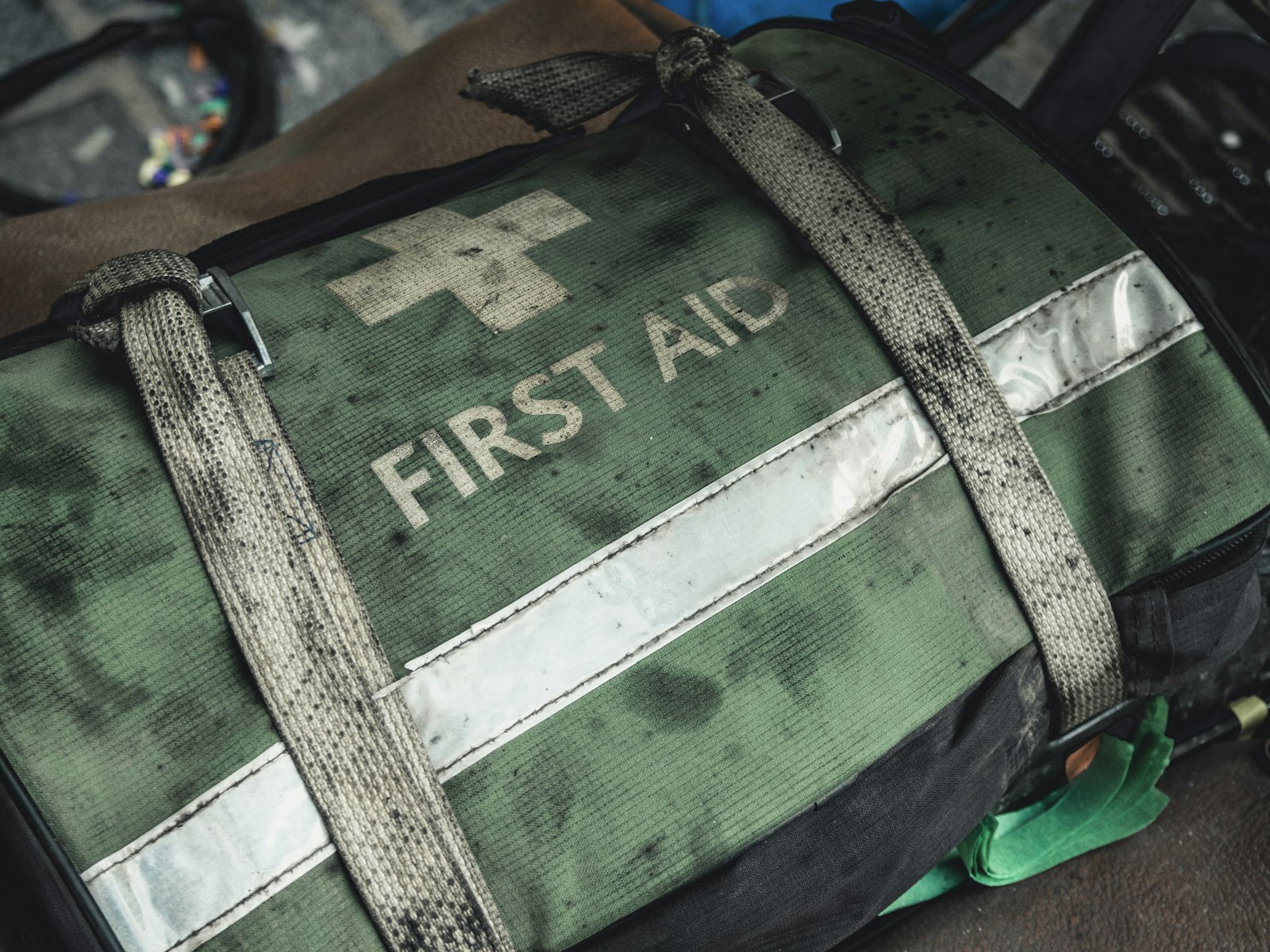
A standard drugstore first aid kit is built for cuts and scrapes — adhesive bandages, antiseptic wipes, a few gauze pads. It is not built for the injuries that actually threaten a life in the time before EMS arrives. A household or a work vehicle in rural Tennessee is better served by a small trauma kit: a commercial tourniquet, compressed gauze rated for wound packing, and a pair of trauma shears, stored somewhere every adult in the house knows to find without searching.
The kit matters less than the willingness to use it. Gear sitting in a drawer does nothing for the person bleeding on the kitchen floor if no one in the house has ever practiced applying it.
Training Is What Turns a Kit Into a Skill
This is the gap Beacon Rescue exists to close. Our instructors — Special Forces veterans, law enforcement, and emergency managers — teach hands-on medical courses alongside our swift water and rope rescue training, built around real, high-consequence scenarios rather than a lecture and a pamphlet. In 2026, that training is part of our push to certify 100 Tennessee volunteer firefighters at no cost to their departments, but the same medical courses are open to civilians, families, and workplaces that want their people to be capable, not just aware.
Forty minutes is a long time to wait empty-handed. It is a manageable amount of time if the people already on scene know exactly what to do.
Bring This Training to Your Department or Community
If you lead a volunteer fire department, a church, a business, or a neighborhood group in Tennessee and want hands-on Stop the Bleed training for your people, contact Beacon Rescue to schedule a course. If you'd like to help fund free training seats for the volunteer firefighters and communities who need them most, you can donate to Beacon Rescue today.