
Swift Water Rescue 101: Why Moving Water Is the Most Underestimated Killer in a Flood
Every flood deployment we run starts with the same conversation. Someone points at water crossing a road and says it doesn't look that bad. It rarely does. Moving water hides its power because the surface looks calm, the depth looks shallow, and the distance to the other side looks short. All three of those judgments are made from dry ground, and all three are usually wrong.
Swift water is water in motion, and motion is what changes the math. A pond you could stand in all day becomes a hazard that can take a grown adult off their feet once it starts moving. Understanding why is the first step in either avoiding the water or being trained to work in it.
Six Inches Is Enough
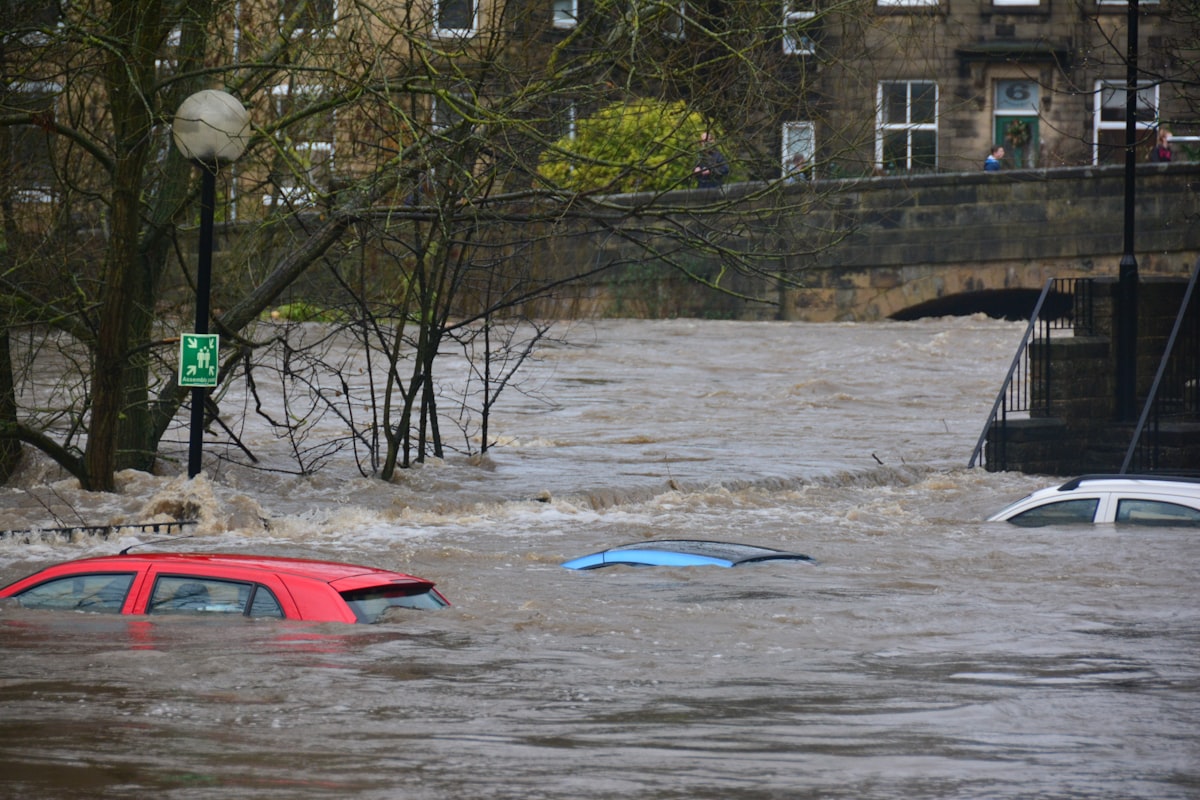
The numbers first responders learn early are smaller than most people expect. Roughly six inches of moving water is enough to knock an adult off balance. About a foot is enough to float a small car; two feet will carry away most vehicles, including trucks and SUVs. None of that requires a raging river. A flooded county road on a rural route in Middle Tennessee will do it.
The reason is force. The push water exerts against a body or a vehicle rises sharply as the current speeds up — doubling the speed doesn't double the force, it multiplies it. That is why a creek that ran ankle-deep and slow yesterday can be immovable today after four inches of rain upstream. The depth may look similar. The force is not.
This is also why the "I'll just walk it" instinct fails. Once your feet leave the bottom, you are cargo. You go where the water goes, at the speed the water chooses, into whatever the water is running into.
Most Flood Deaths Happen in Vehicles
A significant share of flood fatalities in the United States involve people in cars. That statistic surprises people until you break down the sequence. A driver reaches a covered road at night. The water is opaque, so the depth is unreadable. The roadbed underneath may already be washed out, which means the crossing is deeper than the water line suggests. The car enters, loses traction, and floats — and a floating car has no brakes, no steering, and no way to stop what happens next.
The National Weather Service built an entire campaign around the fix, and it is still the single best piece of flood safety advice available: turn around, don't drown. A detour costs twenty minutes. The alternative costs a rescue crew, a night, and sometimes a life.
The Hazards You Cannot See From the Bank
Trained rescuers read moving water the way a medic reads vital signs — looking for specific, named problems:
- Strainers. Downed trees, fence lines, and debris piles let water pass through but pin anything solid against them. The current holds you there and does not let go.
- Hydraulics. Low-head dams, culverts, and drop structures create a recirculating current that pulls a person back into the drop repeatedly. They look flat and harmless from upstream.
- Foot entrapment. Standing up in a current and wedging a foot between rocks or debris is one of the most common ways people are pulled face-down into water only knee-deep.
- Cold and contamination. Floodwater carries sewage, fuel, chemicals, and sharp debris, and it drains body heat faster than air at the same temperature. Both degrade a victim's ability to help themselves within minutes.
None of these are visible from a shoulder or a bridge. All of them are the reason swift water is treated as a technical rescue discipline rather than a strong-swimmer problem.
What Trained Rescuers Do Differently
The governing principle in swift water rescue is that risk to the rescuer escalates in a known order: talk, reach, throw, row, go. You start with the lowest-risk option that could work — voice contact, then a pole or branch, then a throw bag, then a boat — and you enter the water last, not first. Entering first is how a single-victim incident becomes a multiple-victim incident.
Around that sit the disciplines that take training to build: proper personal flotation and helmets, upstream spotters and downstream safety, defensive and aggressive swimming positions, rope systems that never tie a rescuer to a fixed line, and a scene size-up that accounts for what the water will be doing in an hour, not just what it is doing now.
These are learnable skills. They are also perishable ones, which is why departments run them again and again rather than checking a box once.
The Training Gap Is the Real Problem
Most of the fire and rescue coverage in rural America is provided by volunteers. Those departments answer flood calls with the same urgency as anyone else, and they are frequently first on scene — often well before any state or federal resource arrives. What they are usually short of is not commitment. It is funded seat time in technical disciplines like swift water, rope, and field medicine, where tuition and travel are real barriers for a department operating on a small budget.
Beacon Rescue exists in that gap. Watching volunteer departments carry the load after Hurricane Helene is what shaped our 2026 commitment: train 100 Tennessee volunteer firefighters at no cost to them or their departments. Free means free — no tuition, no hidden fees, taught by instructors with Special Forces, law enforcement, and emergency management backgrounds.
If you lead or serve in a volunteer department and want swift water training for your people, get in touch with our team. If you want to put more responders through it, your donation funds a seat — and that seat shows up on the worst day someone in your community will ever have.