
Swift Water Rescue 101: Why Moving Water Is the Deadliest Part of a Flood
Most people can look at a burning building and correctly judge that it is dangerous. Moving water does not read that way. A flooded roadway looks like a road with water on it. A swollen creek looks like a creek. The visual cues that trigger caution in nearly every other emergency are largely absent, and that is exactly what makes flood water the hazard that catches trained and untrained people alike.
Swift water rescue is its own discipline for a reason. Here is what makes moving water different, and what every household and volunteer department in Tennessee should understand about it.
Water is heavier than intuition allows
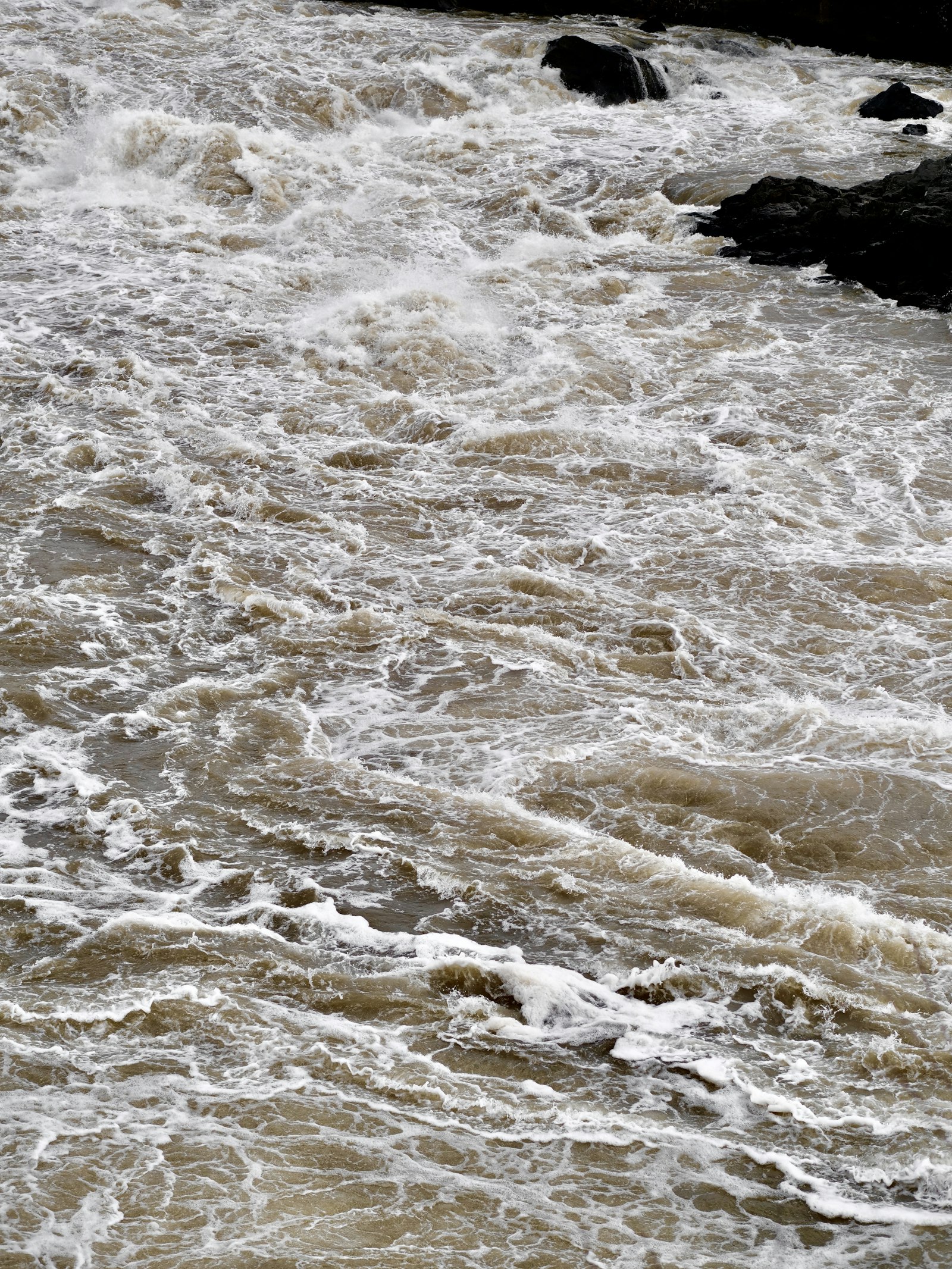
The core problem is force. Water weighs roughly 62 pounds per cubic foot, and the force it exerts against an object increases with the square of its velocity. Double the current speed and the force against a person's legs does not double — it roughly quadruples.
This is why the practical guidance is so conservative. Six inches of fast-moving water is enough to knock an adult off their feet. Once footing is lost in a current, standing back up is extremely difficult, because the same force that took you down is now working against a body with far less leverage.
Vehicles fare no better than people. Roughly a foot of moving water can float most passenger cars, and once a vehicle is buoyant it is no longer a vehicle — it is a large object being carried downstream by the current, with people inside it.
The hazards you cannot see
Flood water is opaque. That is not a cosmetic problem, it is the central tactical problem.
Under the surface, a flooded road may no longer be a road. Moving water scours out the base beneath pavement, and a section that looks continuous can be a washed-out void. Storm drains and culverts running at capacity create suction that a swimmer cannot fight. Debris fields collect against bridge pilings and fence lines and become strainers — obstacles that let water pass through but hold a person against them with the full force of the current behind them.
Downed power lines in standing water, submerged vehicles, and displaced propane tanks and chemical containers add hazards that are simply invisible from the bank. Rescuers trained in swift water are taught to read the surface for what it indicates underneath, and to assume the worst about what they cannot see.
Why untrained rescue attempts so often produce a second victim
The instinct to go in after someone is human and it is admirable. It is also, statistically, how bystanders and unprepared responders become the people who need rescuing.
Trained swift water response follows a deliberate order of operations, taught as a progression from lowest risk to highest: talk — direct the person from shore; reach — extend a pole, branch, or object; throw — deploy a throw bag or flotation; row — use a boat; go — enter the water, only with proper personal protective equipment, training, and upstream and downstream safety in place. Entry is the last option, not the first, and it is never performed alone.
Equipment matters as much as sequence. A standard fire turnout coat and boots — the gear a volunteer firefighter already owns and trusts — are the wrong gear here. They absorb water, they add weight, and they restrict movement in exactly the conditions where mobility keeps a person alive. Swift water work requires a properly fitted personal flotation device rated for the application, a helmet, and gear designed to shed water rather than hold it.
What this means for rural Tennessee departments
Middle Tennessee's geography puts a great deal of low-water crossings, creek beds, and steep drainage between homes and the nearest station. When a storm system stalls over a watershed, those crossings become the emergency, and the first units on scene are frequently volunteer departments whose members have never had access to formal swift water training — not from any lack of will, but because that training is expensive and rarely available locally.
That gap is what Beacon Rescue's 2026 campaign was built to address. Our goal this year is to train 100 Tennessee volunteer firefighters at no cost to them or their departments. The campaign grew directly out of what we saw during the Hurricane Helene response alongside Erwin Fire Department, where the difference between a department with water training and a department without it was visible in real time.
What households should know before the next storm
A few things worth settling in advance, while nothing is happening:
- Turn around, do not drown. It is a slogan because it works. A flooded roadway is never worth the risk, regardless of how well you know the road or how shallow it looks.
- Know your property's water. Understand where water moves across your land and which routes out of your neighborhood flood first. Decide your route before you need it.
- Move early, not late. Most swift water rescues involve people who waited, then attempted to leave once conditions were already deteriorating.
- Do not self-deploy. If you want to help after a flood, coordinate through your county emergency management agency or an organized response group. Unaffiliated volunteers arriving on scene add to the workload of the people running the operation.
Training is the difference
Moving water is unforgiving, but it is not unpredictable. It behaves according to physics that can be taught, read, and planned around. That is the entire premise of swift water training: the hazard does not change, but the person facing it can.
If you serve with a Tennessee volunteer department and want your people included in this year's free training, get in touch with us. If you would like to help put more trained responders on the water before the next storm system stalls over a Tennessee county, you can support the campaign here.