
The Partner Agency Playbook: How Sheriffs, EMAs, and Nonprofits Coordinate in the First 24 Hours of a Disaster
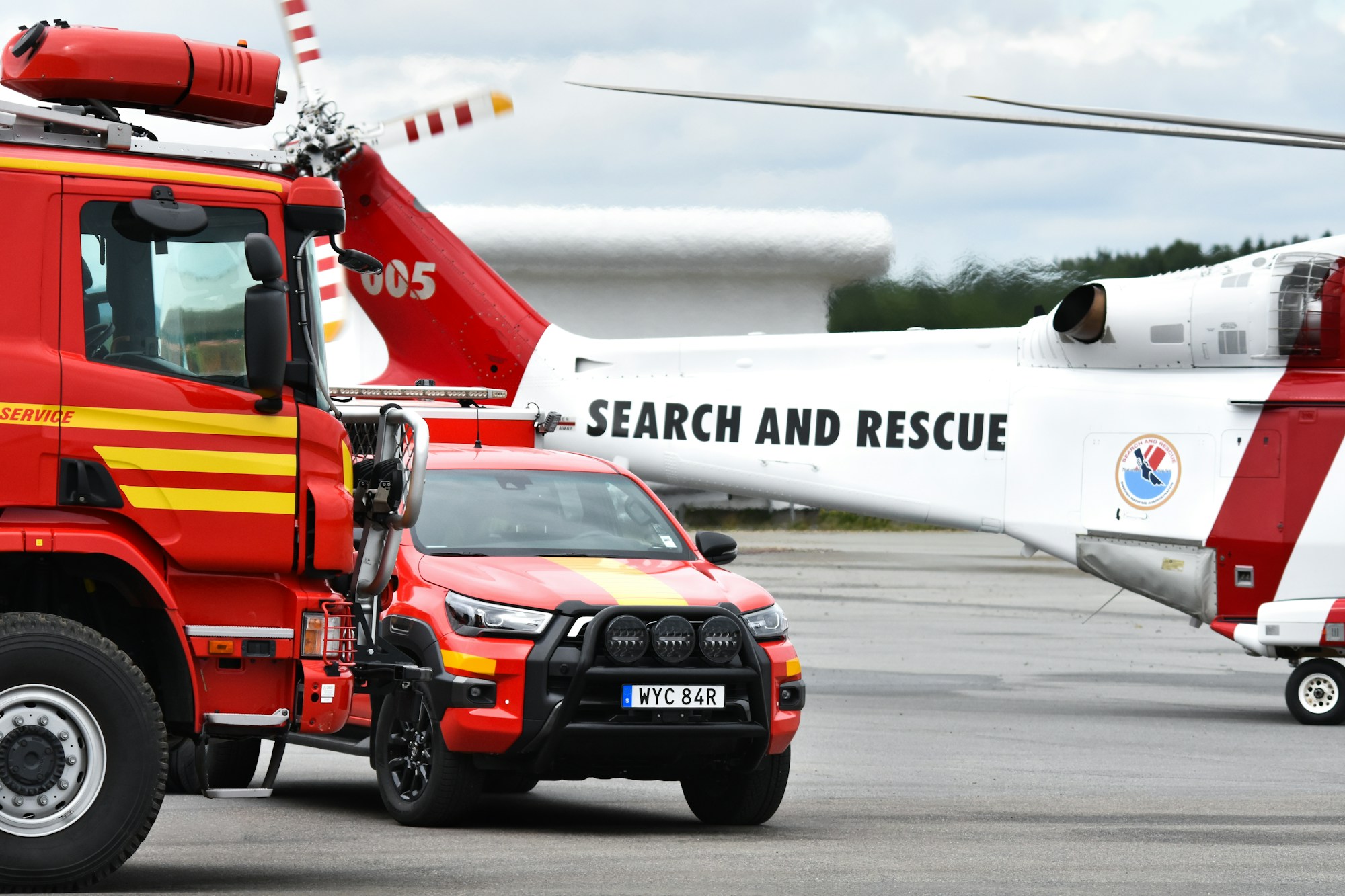
When a flood, tornado, or hurricane hits a Tennessee county, the first 24 hours determine almost everything that follows — who gets found, who gets fed, and who gets left waiting. Those hours are rarely won by a single agency working alone. They're won by a sheriff's department, a county Emergency Management Agency (EMA), a state resource, and a nonprofit like Beacon Rescue all reading from the same page before the storm has even finished clearing out.
We've spent the past two years deploying alongside county EMAs and sheriff's offices from the Cumberland Plateau to the Gulf Coast, and the pattern holds every time: disasters aren't won or lost on capability. Most agencies and most trained nonprofits have solid people and solid gear. Disasters are won or lost on coordination — whether the right teams know where to go, what's already been covered, and who's in charge of deciding.
Who's Actually in the Room
In a county-level disaster, the first 24 hours typically involve four kinds of partners, each with a distinct job:
The county sheriff's office holds law enforcement authority and, in most Tennessee counties, initiates the first call for outside help. They know the roads, the at-risk addresses, and who's already reported missing.
The county or regional EMA runs the Emergency Operations Center (EOC) and owns the incident command structure. Under the National Incident Management System (NIMS), the EMA director is typically the one who requests mutual aid and assigns resources to tasks — which stretch of river gets searched first, which neighborhood gets a welfare check.
State resources — Tennessee Emergency Management Agency (TEMA), the Tennessee National Guard, state fire mutual aid — scale in when a county's own capacity is exceeded, usually once a local emergency has been formally declared.
Trained nonprofit teams like Beacon Rescue fill a specific gap: technical skills (swift water, rope rescue, wilderness medical) that many small and mid-sized departments don't train to on a regular basis, offered at no cost to the county and typically staged and ready before the storm clears.
None of these four groups can do the job the other three are built for. The work is deciding, in advance, who does what.
Why the First Call Matters More Than the First Truck
The instinct after a disaster — for volunteers, donors, and nonprofits alike — is to move fast. But speed without a request from the requesting authority creates a second problem inside the first one. Self-deployed teams that show up without a tasking clog roads EMAs need clear, duplicate work already assigned to someone else, and pull search-and-rescue attention toward managing well-meaning strangers instead of finding people who are actually missing.
That's why Beacon Rescue's deployment protocol starts with a phone call, not a drive. Before a team moves, we confirm three things with the requesting EMA or emergency manager: what capability is needed, where it's needed, and who our team reports to once on scene. It's a smaller, less dramatic first step than loading trucks — and it's the one that keeps our teams useful instead of underfoot.
What Good Coordination Looks Like on the Ground
During our response work this year, the difference between a smooth first 24 hours and a chaotic one has consistently come down to three habits, not equipment:
A single point of contact. The EOC assigns one liaison to track our team's status, tasking, and check-ins. When that role is clear from hour one, resources get to the right place without three agencies independently calling the same team.
Shared situational awareness. Even a basic shared map — roads out, areas already cleared, confirmed welfare checks — prevents two teams from covering the same three blocks while a fourth block goes unchecked.
A plan for handoff. Every deployment has an end point where county resources or state assets can sustain the work without us. Knowing that point in advance, rather than discovering it mid-response, is what lets a nonprofit team leave a county better staffed than we found it, instead of leaving a gap when we pack out.
These aren't complicated ideas. They're closer to logistics than heroics. But they're the difference between a response that compounds — where every hour of work builds on the last — and one that fragments into overlapping, uncoordinated effort.
What This Means Going Into Hurricane Season
Tennessee counties don't all have the same bench depth. Some EMAs run tight, well-rehearsed incident command with mutual aid agreements already signed. Others are one part-time director and a handful of volunteers. Part of why Beacon Rescue trains free responders year-round — including the 100 Tennessee volunteer firefighters we're certifying in swift water, rope, and medical skills this year — is that pre-existing relationships and known capabilities are what make the first-24-hours coordination work. An EMA that already knows what a Beacon Rescue team can do, and already has our number, makes a faster and safer call than one meeting us for the first time mid-disaster.
That's also why we spend as much time before disaster season building relationships with sheriffs, EMA directors, and fire chiefs as we do training swift water technique. A rescue operation is only as fast as the slowest handoff in the chain, and the chain gets built long before the water rises.
How You Can Help Strengthen That Chain
Every dollar donated to Beacon Rescue goes toward keeping trained teams ready to deploy on an EMA's request — gear maintained, certifications current, relationships in place before the call comes in. If you're part of a Tennessee county agency, department, or nonprofit and want to talk through mutual aid coordination before the next storm season, we want that conversation now, not during an active response.
Learn more or start that conversation at beaconrescue.org/contact, or support the training and readiness that makes fast, well-coordinated deployments possible at beaconrescue.org/donate.