
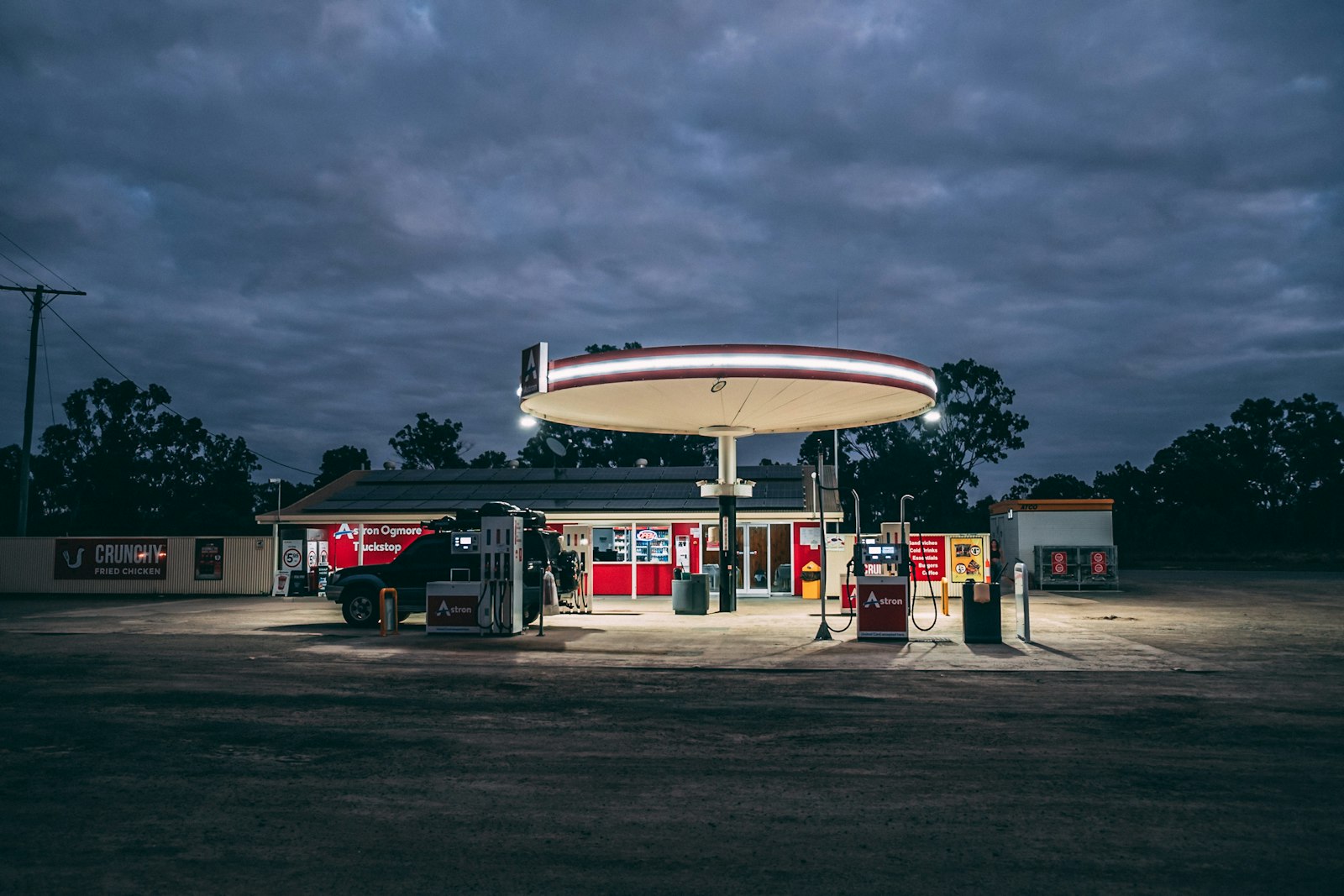
Trafficking Red Flags at Gas Stations, Motels, and Truck Stops: A Practical Guide for Everyday Tennesseans
Most people picture human trafficking as something that happens somewhere else — in another country, in a locked basement, in a movie. In practice, it moves through ordinary places: the fuel island off the interstate, the motel with exterior doors and a gravel lot, the travel plaza where nobody stays long enough to be remembered. Tennessee sits at the crossing of I-40, I-24, I-65, and I-81. A great deal of legitimate freight, tourism, and family travel passes through this state every day. So does a small amount of something else.
Beacon Rescue works in counter-exploitation alongside our disaster response, and the single most common question we get from volunteers and community groups is a practical one: What am I actually supposed to look for? This is that answer — the indicators used in the training that law enforcement, transportation workers, and hospitality staff receive, written for people who are simply pumping gas or checking into a room.
Why these locations
Traffickers are not drawn to gas stations, motels, and truck stops because those places are sinister. They are drawn to them because those places are transient. Everyone there is passing through, cash still works, identification is rarely checked, and nobody expects to see the same faces twice. Anonymity is the operating condition, and exploitation depends on it.
That same condition is what makes an ordinary observer valuable. A clerk who has worked the overnight shift for three years knows what normal looks like at 2 a.m. A driver who stops at the same plaza weekly notices a vehicle that does not fit. Trained observation, not confrontation, is what breaks the anonymity.
Indicators at a gas station or truck stop
National training programs — including the Department of Homeland Security's Blue Campaign and Truckers Against Trafficking, which trains professional drivers and travel-plaza staff — point to a consistent set of observations:
Someone appears to be under another person's control: a third party answers for them, holds their identification, or does not let them speak alone.
A person cannot say where they are, where they came from, or where they are going.
Signs of restricted movement — not allowed to walk into the store alone, escorted to and from the restroom, monitored from a vehicle.
Someone who appears to be a minor engaged in commercial sex, in any circumstance. Under federal and Tennessee law, this is trafficking. No proof of force is required.
Movement between parked trucks or vehicles late at night, or repeated door-to-door contact in a lot.
CB or phone chatter advertising commercial sex, sometimes using coded language.
Visible fear, hypervigilance, avoidance of eye contact, or fear of law enforcement out of proportion to the setting.
Poor physical condition — malnourishment, untreated injuries, clothing inappropriate for the weather — combined with any of the above.
Indicators at a motel
Hospitality settings carry their own pattern, familiar to front-desk staff and housekeepers:
A room rented by one person while several others arrive separately and are brought in.
Payment in cash for consecutive nights, extended stays with no luggage, or refusal of housekeeping for days at a time.
Heavy, brief foot traffic to a single room at unusual hours.
An adult renting a room and paying for a guest who appears to be a minor and is not a family member.
Occupants with no personal belongings — no bags, no toiletries — despite a multi-night stay.
A guest who is not permitted to hold their own room key, phone, or identification.
Requests for a ground-floor room near an exit combined with a person who seems to be controlling who enters and leaves.
What a red flag is not
This part matters as much as the list. Almost every indicator above has an innocent explanation. A tired family pays cash. A teenager avoids eye contact. A traveler who lost a wallet cannot produce identification. Someone with a disability may rely on another person to speak for them. A worker sleeping in a truck for a week has no luggage to unload.
A single indicator is not evidence of anything. What matters is a cluster — several signs together, in a context that does not resolve. And the standard is never a person's appearance, race, accent, or immigration status. Trafficking victims in Tennessee are frequently U.S. citizens, frequently minors, and frequently known to the person exploiting them. Profiling produces false reports, wastes the time of a small number of investigators, and does real harm to people who have done nothing wrong. Observe behavior and circumstances, not people.
What to do — and what not to do
Do not intervene. Do not confront a suspected trafficker, question a suspected victim, attempt a rescue, or follow a vehicle. Every one of those actions increases the danger to the person you are trying to help and can destroy a case that trained investigators could otherwise build.
Do this instead:
Write it down while you can still see it. Time, date, exact location, vehicle make and color, license plate, number of people, physical descriptions, what specifically you observed.
Report immediate danger to 911. If someone is being harmed right now, that is the call.
Otherwise, call the Tennessee Human Trafficking Hotline at 1-855-55-TNHTH (1-855-558-6484). It is operated through the Tennessee Bureau of Investigation, which established the state hotline and its Human Trafficking Unit following a statewide study of the problem.
Or call the National Human Trafficking Hotline at 1-888-373-7888, or text 233733. Both are confidential and available around the clock.
Report even if you are not certain. You are not being asked to reach a conclusion. You are being asked to hand trained people a piece of information they do not currently have.
The reason civilian reporting carries weight in Tennessee is arithmetic. The state's dedicated trafficking investigators are a small unit covering all 95 counties. They cannot be at the fuel island at 2 a.m. The clerk, the driver, and the housekeeper already are.
Where this fits in our work
Beacon Rescue is a 501(c)(3) in, Tennessee, led by Special Forces veterans, law enforcement officers, and emergency managers. Counter-exploitation sits next to disaster response in our mission for a specific reason: displacement, damaged housing, cash work, and thin oversight after a disaster create exactly the conditions traffickers look for — and the same trained eye that spots a hazard in a flood zone spots a person being controlled at a truck stop.
If your church, civic group, business, or volunteer fire department wants this material presented to your people, contact our team and we will arrange it. If you want to keep this work in the field, support Beacon Rescue. Either way, learn the indicators, save the hotline number in your phone, and make the call when something does not resolve.